Vape tank leaking: a zone by zone diagnosis
A greasy mark at the bottom of a coat pocket, sticky fingers after every refill, a bead of liquid forming under the tank. Leaking is the single most common complaint in vaping, and the standard advice goes round in circles: change the coil, check the seals. Useful, but incomplete. The real key sits in a question almost nobody asks first.
Start a vape tank leaking diagnosis with the zone, not the cause
Before touching anything, work out exactly where the liquid is coming out. A vape tank leaking through the airflow, through the mouthpiece or through the base thread is not telling you the same story at all. Treating a cause without identifying the zone is repair by guesswork.
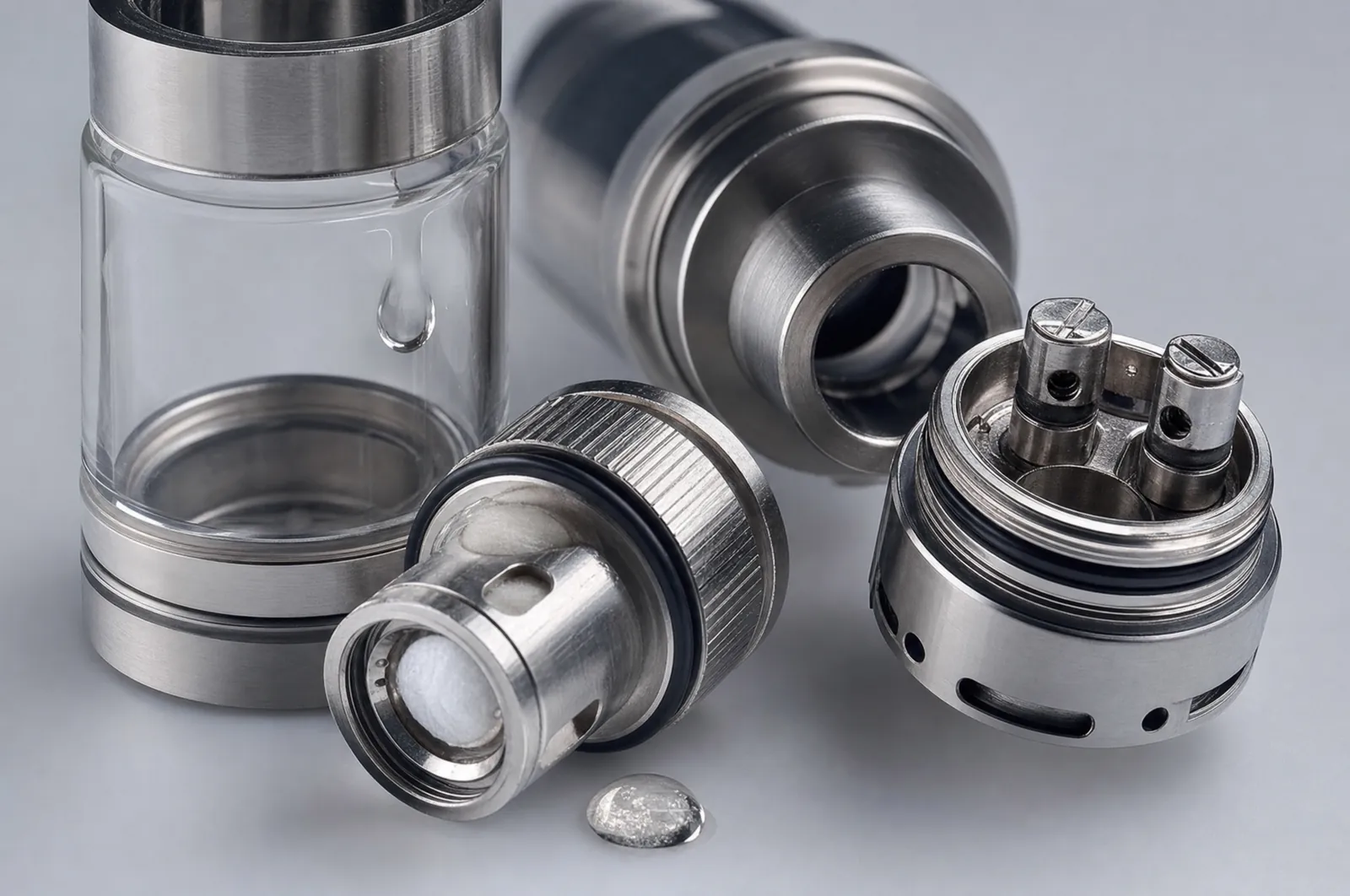
There are three realistic exit points. The airflow, sitting under the tank, releases liquid that has already worked its way past the coil. The mouthpiece, at the top, points instead to liquid pushed back up the chimney. The base thread, between the tank and the battery, gives away a seal or a fitting problem.
Working by zone turns a vague annoyance into a clean diagnosis. Once the exit is identified, the list of plausible causes drops to two or three, and the fix becomes obvious. Retail guides tend to skip this step and list every cause at once, which helps nobody.
Vape tank leaking through the airflow, the usual suspect
Liquid escaping through the air intakes is by far the most frequent case. The mechanism is simple: e-liquid gets past the coil and finds its way out of the bottom. Several factors feed into it, and they rarely act alone.
A coil that has not been screwed home firmly lets liquid slip down the sides. A coil at the end of its life, with cotton that is fully saturated, holds nothing back either. Tightening properly or fitting a fresh coil settles a large share of cases on its own.
Liquid viscosity matters just as much. A high PG blend runs through cotton far more easily than a thicker one, particularly on a higher resistance coil. Since most UK mouth to lung vapers sit on 50/50 nic salts, this is a live issue rather than a theoretical one, and moving to a slightly thicker liquid often calms things down.
Finally, learn to tell condensation from an actual leak. A thin film inside the airflow is usually just vapour that has cooled and settled. Spotting the difference saves you from binning a perfectly healthy coil. A twist of kitchen roll through the airflow is all the treatment it needs.
Leaks from the top and leaks from the base
When the liquid appears somewhere other than the airflow, the causes change completely, and both of these zones are usually quicker to sort out than an airflow leak.
Liquid coming back up through the mouthpiece normally means an overfilled tank or too hard a pull. Leaving a small air bubble at the top when you fill, and drawing more gently, dries the problem up within a day. It is a habit fix rather than a hardware fix.
A weep between the tank and the battery points to a damaged O-ring or a top cap that was not closed properly after filling. Check that every seal is present and still supple, then reassemble in the right order. A vape tank leaking from the base is almost always an assembly fault rather than a faulty tank.
Filling habits that stop a vape tank leaking before it starts
Prevention beats troubleshooting here, because a careful refill removes most leaks before they ever appear. These four reflexes become automatic within a week.
- Close the airflow before you fill, so liquid cannot run straight into the air intakes.
- Pour down the inside wall of the tank rather than into the central chimney that carries the vapour.
- Stop at the fill line and leave a small air bubble rather than topping it to the brim.
- Let a fresh coil stand for a few minutes in a filled tank so the cotton wicks through completely.
A clean tank also leaks less, because residue eventually stops the seals from seating properly. Regular upkeep, set out in our guide on how to clean a vape tank, keeps the whole assembly reliable for longer.
When the battery looks guilty and is not
Sometimes liquid pools on the battery threading and the tank takes the blame unfairly. Telling the two apart saves an unnecessary replacement and points you at the right fix.
A small amount of liquid escaping through the airflow eventually settles in the battery connector, the central pin that joins the two halves. The battery is not leaking: it is catching the overflow from above. Cleaning that connector regularly with a dry cotton bud prevents poor contact and the error messages that follow.
A tank screwed on at an angle makes it worse. Seating it square, without forcing the thread, protects the joint between tank and battery. If the connector keeps getting dirty despite that, the airflow leak upstream is still running and needs treating at source.
What the 2 ml cap changes about leaks in the UK
Every refillable tank and pod sold here is capped at 2 ml under the Tobacco and Related Products Regulations, whatever the manufacturer’s international spec sheet says. That single rule changes the shape of the problem.
Smaller tanks mean more refills, and refilling is precisely the moment when most leaks are created. A UK vaper handles the fill port several times a day, so a sloppy technique gets punished far more often than it would on a larger tank sold elsewhere. The upside is that a 2 ml tank holds less liquid to lose when something does go wrong.
It also means the fill port itself works harder. Seals around a rotating or sliding top cap see constant use, wear faster and deserve a look every time you change a coil. If you are comparing hardware on this point, our guide to picking the best vape tank sets out what a genuinely leak resistant filling system looks like.
Frequently asked questions
Why does my tank only leak after a refill?
Filling is when liquid infiltrates most easily. An airflow left open, an overfilled chamber or an already saturated coil all produce an immediate leak. Closing the airflow before you fill usually solves this one.
Can blowing the tank through stop a leak?
For a mild airflow leak, yes. Cover the mouthpiece with a finger and blow gently through the airflow onto kitchen roll to clear excess liquid from the chamber. It is a quick field fix rather than a cure.
Should I bin a coil that has leaked?
Not automatically. If the leak came from poor seating, the coil is still fine. If it was worn out or flooded, replace it, because the cotton is no longer holding liquid where it should.
Can a brand new tank leak straight away?
Yes, usually because a seal was badly positioned at the factory or the first fill was too generous. Checking the assembly and easing off on the fill level clears up most difficult starts.
Does the way I store it matter?
Considerably. Left on its side or upside down, a tank lets liquid gather against the airflow. Standing it upright, mouthpiece uppermost, limits seepage while it is in a bag or a pocket.
Stopping a leak for good
A vape tank leaking is almost never a lost cause: it is a signal to read through its exit point. Airflow, mouthpiece or base, each zone narrows the causes down to a handful of specific and quickly reversible faults.
Add a careful filling routine and regular cleaning, and leaks become the exception instead of the weekly ritual. If you want to go further into the mechanics behind flooding and dry hits, our explainer on coil ohms and wattage covers the settings that quietly make a tank behave, or misbehave, day after day.
Editorial content for adult readers only. Vaping products can contain nicotine, a substance that causes addiction. Not for sale to under-18s in the United Kingdom. Guide Clearomiseur is an independent editorial title and this article is not a buying recommendation.