MTL and DTL: setting up your vape tank
Two vapers, the same model of tank, and yet two radically different experiences. One takes short tight puffs, the other draws deep and exhales a cloud. Between them sits a single distinction: the inhale. Choosing between MTL and DTL governs everything, from the airflow setting to the coil fitted, and understanding it heads off the most common beginner mistake, the one that makes a setup unpleasant without ever explaining why.
MTL and DTL, two opposite ways of inhaling
MTL and DTL describe two distinct gestures. MTL, mouth to lung, means drawing vapour into the mouth first and then inhaling it. It is the sensation closest to a conventional cigarette, tight and discreet, and it is what most British starter kits are built around.
DTL, direct to lung, sends vapour straight to the lungs in one open draw. The airflow is wide, the effort minimal, and the vapour volume far higher. Between the two sits RDL, restricted direct lung, more open than MTL but tighter than full DTL.
One point of vocabulary matters here. British shops and reviewers write DTL, not DL, and RDL or RDTL for the middle ground. Foreign listings sometimes use DL for the same thing, which is worth knowing when you compare specification sheets across markets.
Choosing your draw is a matter of preference, not of level. Plenty of vapers stay on a tight draw for years because they prefer it. That single choice then dictates every setting on the tank, and this is where theory turns practical.
Setting the airflow for MTL and DTL
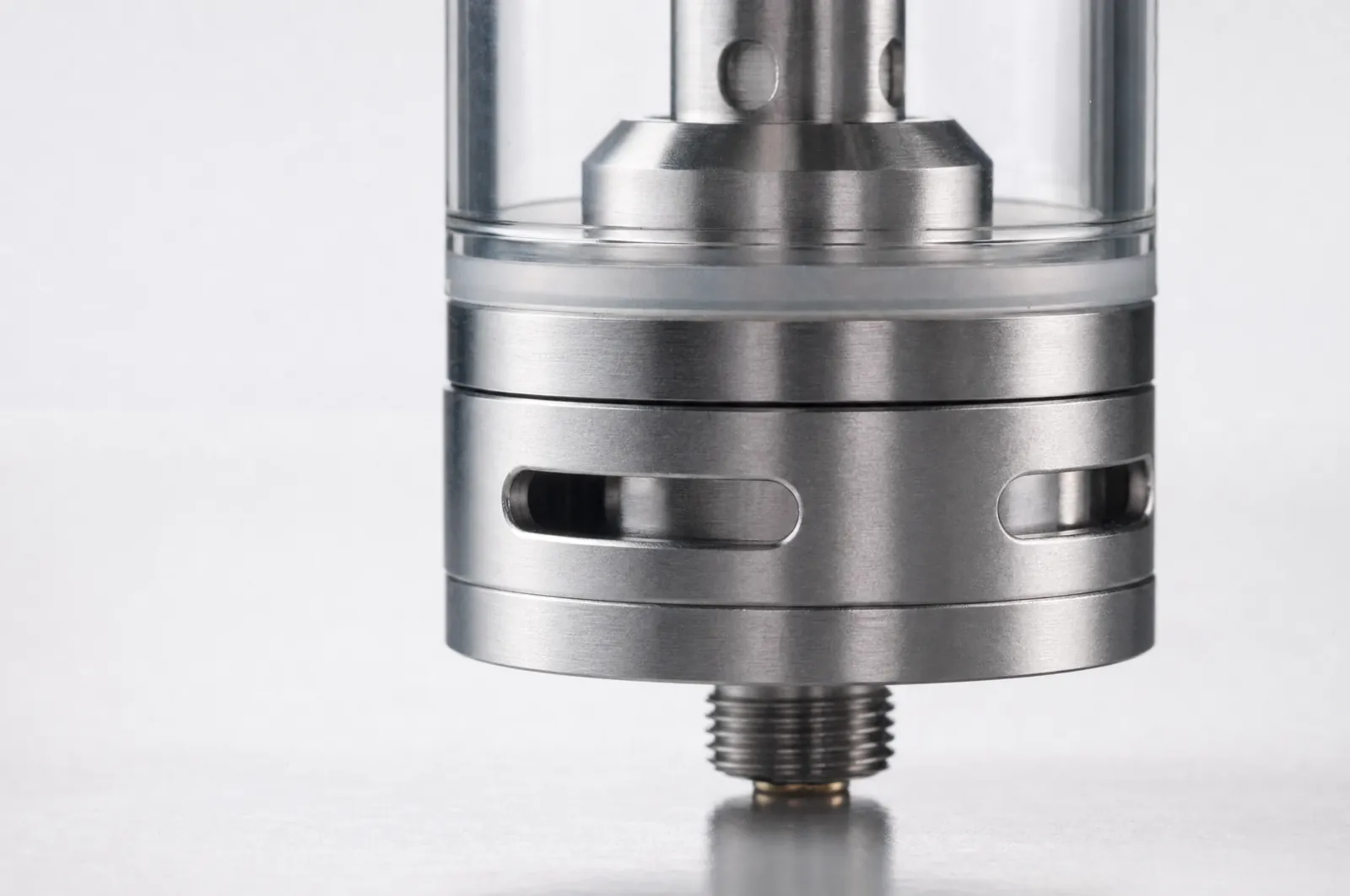
Airflow is the first concrete lever. That adjustment ring, usually at the base of the tank, controls how much air mixes with the vapour. Its setting is the physical translation of the draw you have chosen.
For a tight mouth to lung draw, the airflow sits almost closed. Air passes with difficulty, which creates the resistance to the pull that defines MTL. Too much air destroys that sensation immediately and leaves the vape feeling hollow and thin.
Direct lung demands the opposite: a wide opening that lets a generous flow through. The vapour circulates freely with no suction effort. An airflow left too tight in DTL produces a stifled draw and a tank that runs hot, which in turn shortens coil life.
Most tanks sold here fall clearly on one side or the other, and only a minority genuinely cover both ends. Our comparison of the best vape tank by profile sets out which models actually deliver on that promise.
Matching coil and e-liquid to the draw
Airflow alone is not enough. The draw also dictates a coil value and a liquid type that have to agree with it. A successful setup is the whole chain, not one isolated parameter.
For MTL you want a higher resistance coil, usually above 1 ohm, run at low power. It pairs with a 50/50 liquid, which is thinner and carries a more defined throat hit. That trio produces warm, discreet vapour and modest consumption, which matters when your tank holds 2 ml.
For DTL the logic inverts. A low resistance coil below 0.8 ohm asks for more power and a higher VG liquid, thicker and more vaporous. The link between draw and coil value is covered in detail in our guide to coil ohms and wattage, where the final balance is struck.
What the UK market does to the MTL and DTL split
British regulation quietly tilts this choice, even though it says nothing about inhale styles. Refillable tanks and pods are capped at 2 ml, and nicotine containing e-liquid is capped at 20 mg per ml.
A 2 ml tank on a direct lung setup empties fast, because low resistance coils at high wattage consume liquid at several times the rate of a mouth to lung setup. That is one practical reason mouth to lung hardware dominates British shelves and why so many kits sold here ship with tight airflow as standard.
The nicotine ceiling reinforces it. With strength capped, a tighter draw is the usual route to a satisfying result, while direct lung setups tend to run at lower strengths for comfort. None of this rules out DTL vaping here, but it explains why the two styles are not equally represented in a British shop.
Which style suits which vaper
That leaves the decision itself. The right draw depends on what you want from vaping, not on a hierarchy of hardware. Three markers cover almost everyone.
- You want something close to a cigarette and discreet in public: mouth to lung is the obvious fit.
- You want volume and an effortless draw: direct lung suits you better.
- You are undecided or like to vary: RDL offers a flexible middle ground on a versatile tank.
The point people forget is that one tank rarely does both well. A tank engineered for MTL stays mediocre in DTL, and the reverse holds too. Choosing hardware built around your dominant style beats hunting for a Swiss army knife that is average at everything.
The most common setting mistakes
Switching between MTL and DTL without adjusting every parameter is the source of most disappointment. Spotting these classic errors shortens the tuning process considerably.
The first is touching only the airflow and forgetting the coil. Opening the ring wide on a high resistance coil does not create a genuine direct lung draw: the vapour stays thin and the result falls flat. The draw is set as a coherent whole, never one parameter at a time.
The second involves the liquid. A thick, high VG liquid on a high resistance coil at low power wicks poorly and produces a dry, scorched taste. Conversely, a thin liquid on a low resistance coil encourages seepage. Matching viscosity to the draw avoids both traps.
The third is more insidious: wanting one setting for everything. A tank parked on a soft compromise between MTL and DTL satisfies neither. Better to commit to a dominant style and tune it finely. Residue builds faster on a badly matched setup too, so our guide on how to clean a vape tank is worth a read alongside this one.
Frequently asked questions
Can I switch between the two styles on one tank?
Only if the tank was designed for it, with a genuinely wide airflow range and two compatible coil families. Most models are optimised for one dominant draw and are less convincing on the other.
Does the draw change how much liquid I use?
Considerably. Direct lung, with its low resistance coils and higher power, consumes far more liquid than mouth to lung. The same bottle lasts noticeably less time.
Does nicotine strength depend on the draw?
Indirectly, yes. Mouth to lung setups, being less vaporous, are commonly paired with higher strengths within the 20 mg ceiling, while direct lung setups tend towards lower ones for comfort. Everyone adjusts to their own sense of it.
Why does my MTL draw feel too airy?
Because the airflow is too far open. Closing it gradually tightens the draw back to what you expect. A liquid heavy in vegetable glycerine can also dilute that impression of tightness.
Is RDL suitable for a beginner?
Yes, and it makes a good learning ground. RDL gives a softer draw than full DTL while introducing direct inhaling, without the effort or the vapour volume that can be off putting at first.
Choosing your draw, in summary
The choice between MTL and DTL is not a technical footnote: it is the decision that structures your entire configuration. Airflow, coil value and e-liquid all follow from it, and none of them can be set sensibly in isolation.
Line those three settings up with your own style and an ordinary tank becomes hardware that genuinely fits you. Get them out of step and even excellent hardware disappoints, which is why so many vapers blame a tank when the fault was a mismatch between the way they inhale and the way they had it set up.
Editorial content for adult readers only. Vaping products can contain nicotine, a substance that causes addiction. Not for sale to under-18s in the United Kingdom. Guide Clearomiseur is an independent editorial title and this article is not a buying recommendation.